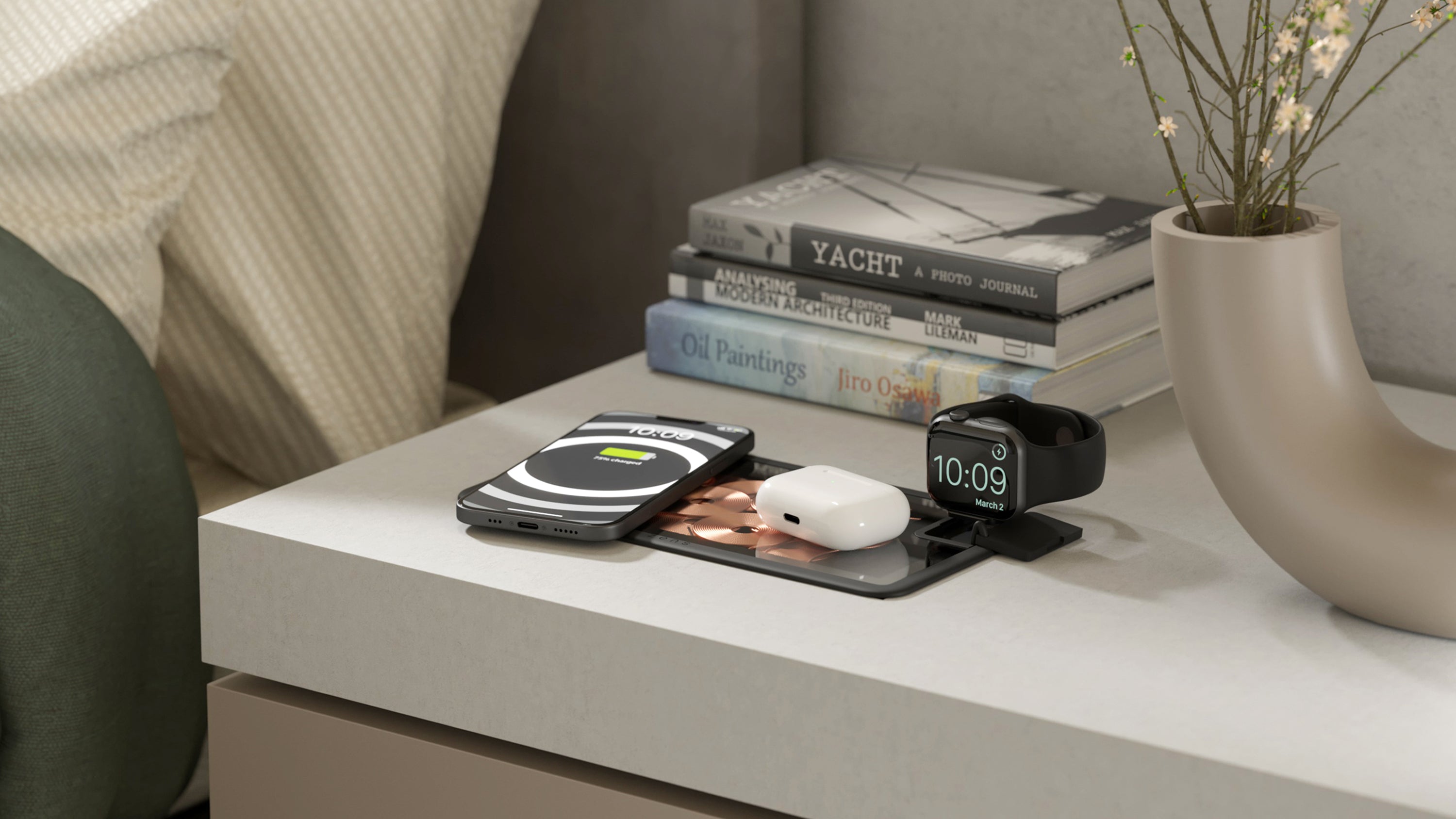
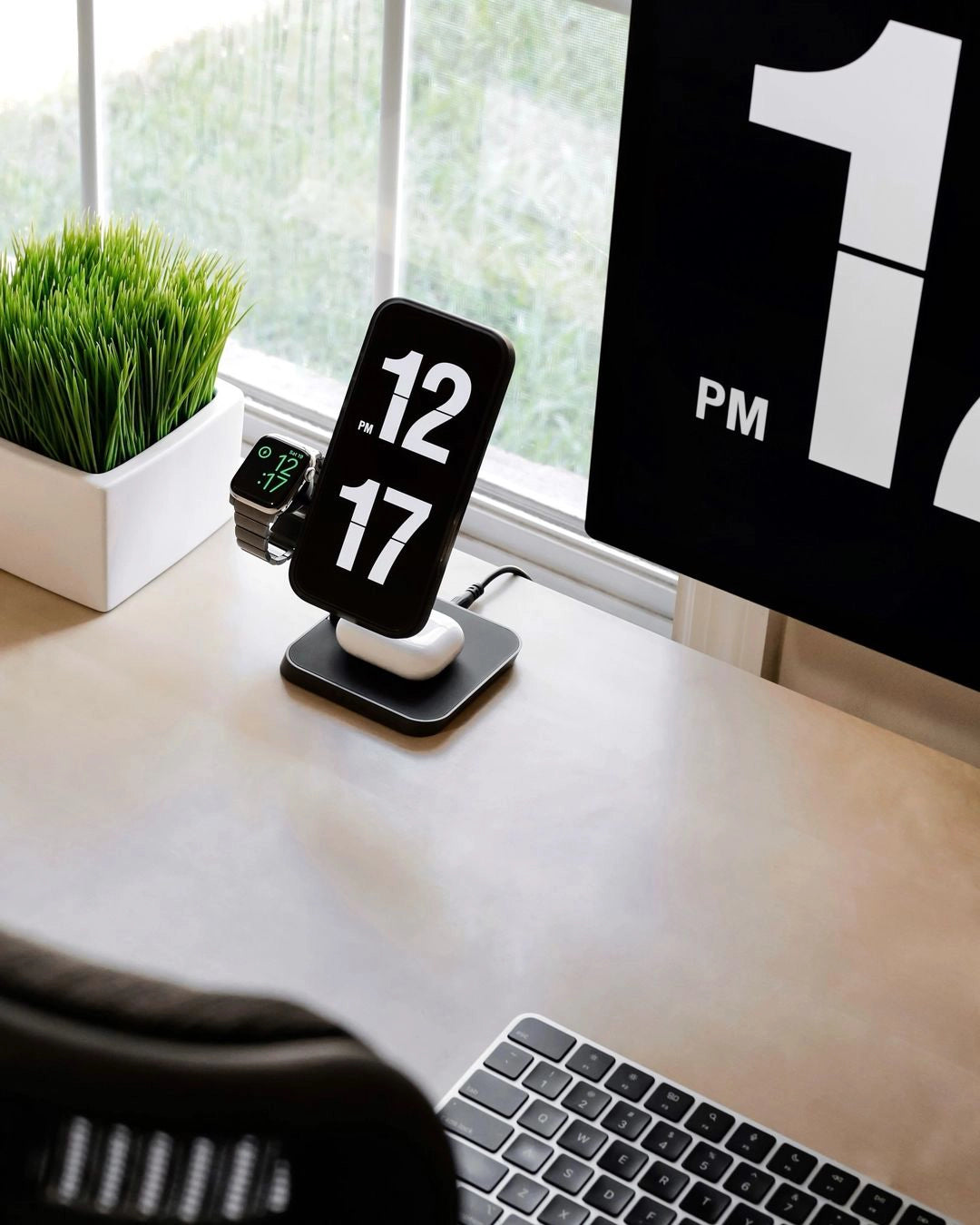
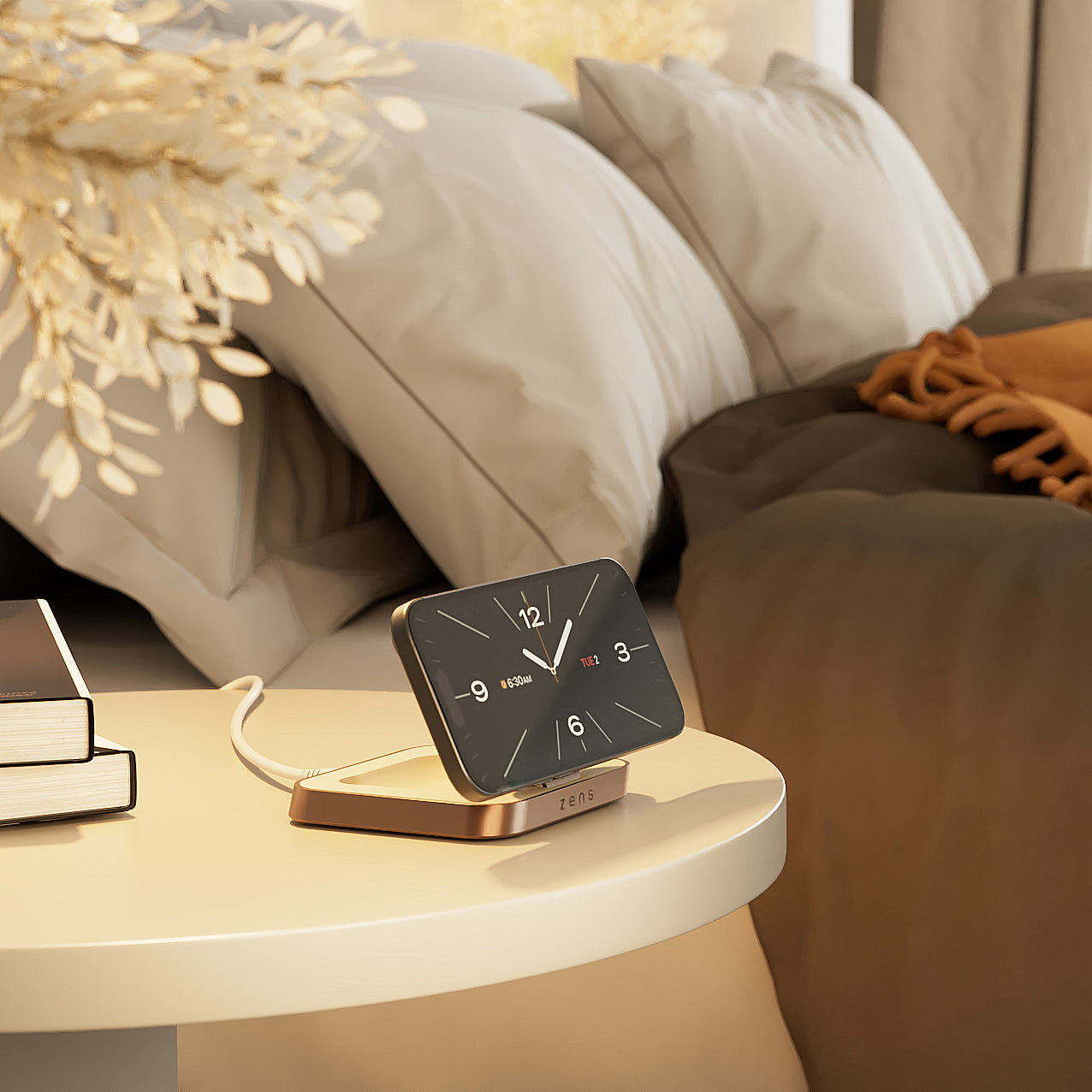
When it comes to wireless charging, more Watts doesn’t always mean faster. A 15W charger sounds greatbut if your phone only supports 10W, it won’t charge any faster. Discover which power output fits your device and lifestyle best, from fast charging on the go to slow and steady overnight.

Charger on desk

What the watt?

The higher the power output of a charger is, the faster your device will be charged, right? Why buy a charger with a 10 Watt (W) output if the same charger is available in a 15W version?

Well, more power does not necessarily mean faster charging. In some cases it may even make more sense to choose a 10W wireless charger over a 15W version.

15W vs 25W wireless charger

When choosing a wireless charger, it’s not just about the charger’s maximum power output. Your smartphone model and how you use the charger also play an important role. A 25W wireless charger isn’t automatically faster for every device than a 15W model. Your phone determines how much power it can receive. If your phone supports a maximum of 15W via Qi2, a 25W charger will still charge it at up to 15W. Older models may be limited to 7.5W or 10W.

Also consider when you usually charge your device. For a quick boost during the day, higher charging speeds can be useful. If you mainly charge overnight, maximum speed is often less important. So, when comparing 15W vs. 25W wireless charging, it’s not simply about choosing the highest wattage. What matters most is what your smartphone supports and how you use your charger.

Fast charging explained

Fast charging reduces charging time, but to take advantage of it, both your device and wireless charger must support fast charge. The newest technology (Qi2/MagSafe) supports 15W charging, delivering newest phones around 35% battery in just 30 minutes: ideal for a quick and efficient power boost. However, your charging routine matters too. If you charge overnight, speed is less important; 5W is more than enough to ensure you wake up to a full battery. As fast charging continues to evolve, 15W has become the modern standard in wireless charging. With the introduction of Qi2, and its Qi2.2 update, this 15W standard is now being applied more efficiently and reliably than ever.

How many watts do I need?

Generally, it is best to choose the charger with an output at least equal to what is supported by your device. However, when or where you plan on using the charger, may also play a role in what output is most efficient. Will you place the charger on your nightstand and charge your phone during the night? Then your device will be placed on the charger for a couple of hours, so charging speed is not relevant. In this case a standard 5W charger will be more than enough to do the job.

How many watts do iPhone, Samsung and Android phones support?

Most smartphones today support Qi or Qi2 wireless charging, but charging speeds vary by model. iPhones 8 through 11 charge at up to 7.5W via Qi, while iPhone 12 through 14 rely on MagSafe to reach 15W. iPhone 15 and newer models support 15W Qi2. Samsung and other Android phones also vary in maximum wireless charging speed depending on the model and Qi version. Always check which standard and charging speed your phone supports.

See the full overview of phones with wireless charging: Qi, Qi2 & Qi2.2.