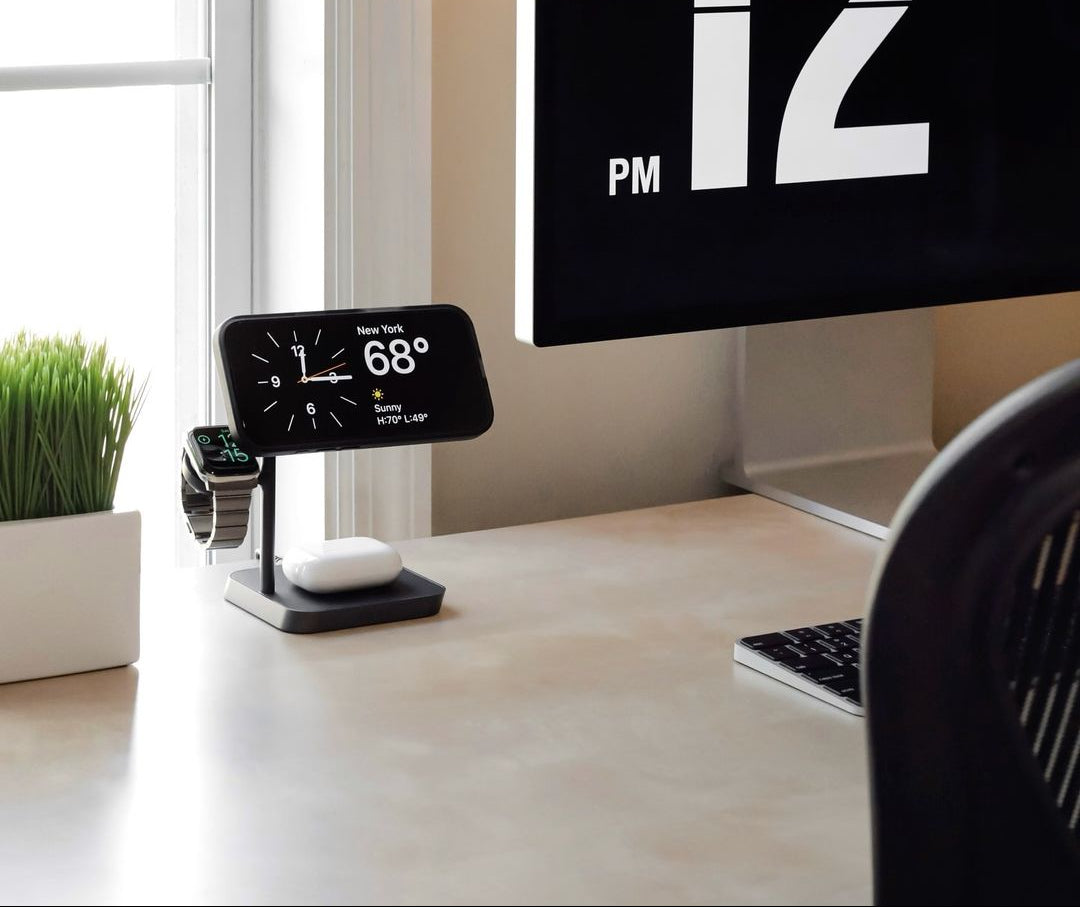
Wireless chargers are now a familiar sight in coffee shops, cars, offices, and modern homes. They promise convenience, a cleaner setup, and less cable clutter. But are wireless chargers better than traditional wired charging?


Wireless charging transfers power using electromagnetic induction. Instead of plugging in a cable, you place your device on a charging pad or stand. Most wireless chargers use the Qi wireless charging standard, which is supported by leading brands like Apple, Samsung, and Google.
Because Qi is widely adopted, wireless chargers are compatible with many smartphones, earbuds, and accessories.
Convenience and ease of use
One of the biggest benefits of wireless charging is simplicity. Just place your phone on the charger and it starts charging automatically. Wireless charging is especially useful when:
For many users, this everyday convenience is reason enough to switch.
Less wear and tear on devices
Because there is no cable to plug in and remove, wireless charging reduces physical stress on:
Over time, this can help prevent loose ports and damaged connectors, which are common reasons for replacing cables or devices.
Cleaner and more aesthetic setup
Wireless chargers are popular for their minimalist design:
This makes wireless charging ideal for modern interiors, offices, and shared spaces where aesthetics matter.
Universal compatibility with Qi charging
Most wireless chargers support the Qi or Qi2 standard, meaning:
For shared environments, this flexibility is a major advantage.
Limited mobility while charging
Wireless charging requires your device to stay in one position:
Wireless power banks reduce this limitation, but standard wireless chargers still offer less flexibility than cables.
Heat and battery considerations
Wireless charging can generate more heat than wired charging. Over time, excess heat may:
Wireless charging can generate more heat than wired charging. Over time, excess heat may:
Modern devices actively manage heat through smart software, while newer standards like Qi2 and Qi2.2 improve efficiency and help protect battery life. That’s why it’s important to choose certified chargers.
Higher cost compared to cables
Wireless chargers are often:
When charging several devices, a multi-device wireless charger keeps everything powered with one solution.
Wireless chargers offer clear benefits: convenience, a clean setup, and reduced wear on charging ports. At the same time, they come with trade-offs such as higher cost, lower efficiency, and less flexibility during charging.
Whether wireless charging is worth it depends on your priorities:
For many users, a combination of both provides the best experience: wireless charging at home or on the nightstand, and wired charging when speed is essential.