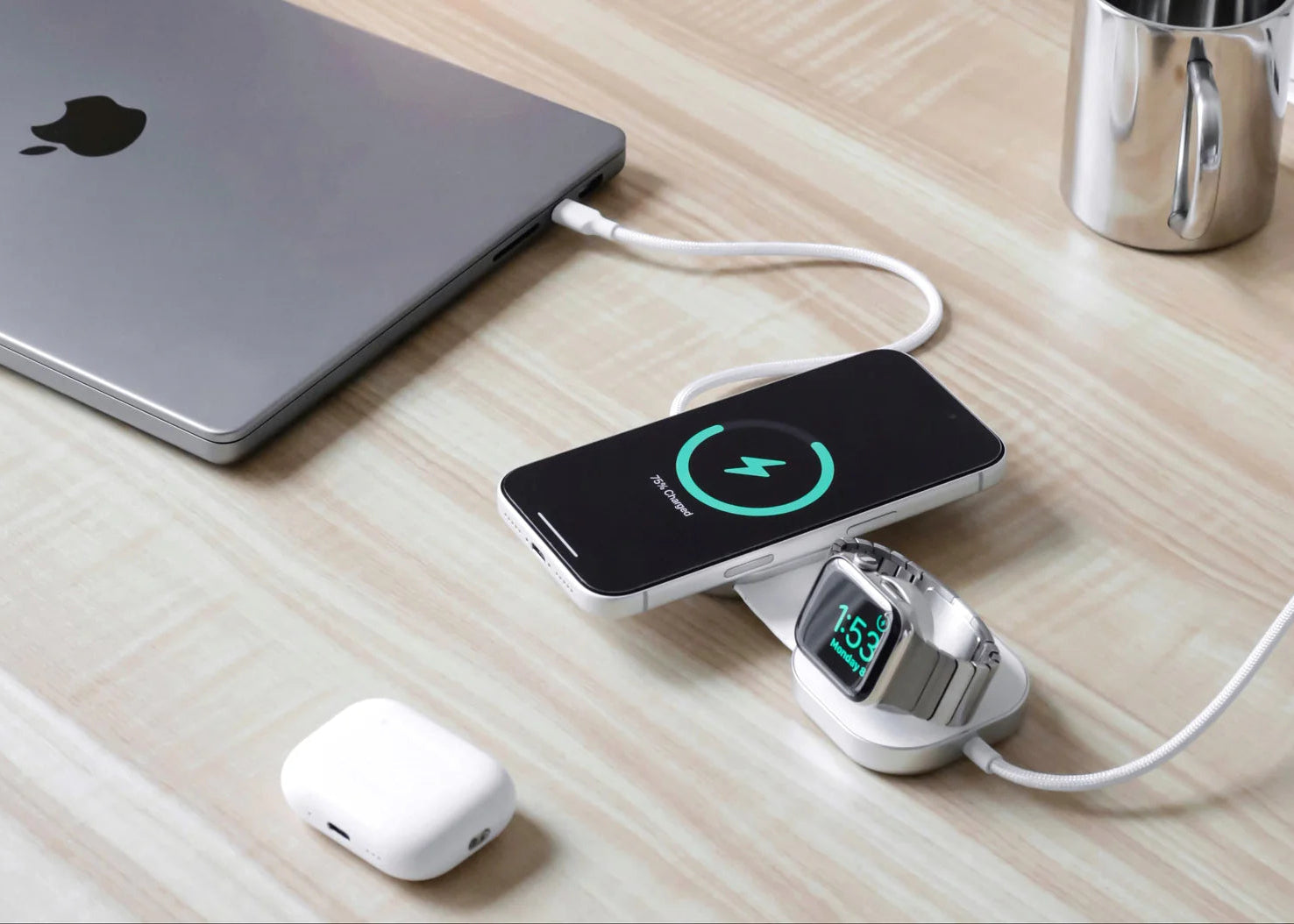
Discover how USB-C is becoming the standard in the modern workplace, driven by European legislation and the need for simplicity. With one connection for power and data, it reduces cables, improves usability and supports a future-ready setup.

Zens PuK Combi HDMI

Zens PuK Combi - 2x USB-C
USB-C has quickly become a connector you see more and more often. It is now used across a wide range of devices, from smartphones to laptops and accessories. This shift is accelerating, partly due to European legislation requiring USB-C for many types of electronics.
For organisations, this means the variety of different connectors is gradually disappearing. Instead of dealing with multiple cables and adapters, one clear standard is emerging. USB-C is no longer just relevant; it is shaping how modern workspaces are designed.
The strength of USB-C lies in combining multiple functions into one connection. A single cable can charge your laptop and connect it directly to your screen and accessories. This makes everyday use simpler and more efficient. USB-C is not just simpler, it is also more powerful. Modern solutions can deliver up to 100W or more, making it suitable even for high-performance laptops.
At the same time, it is important to understand that not all USB-C solutions perform equally. Differences in power output, data speeds and cable quality can have a real impact. The connector may be standardised, but performance depends on the components you use.
| Technical aspect | What it means |
|---|---|
| Connector type | One reversible connector for power, data and other functions |
| Power delivery | Suitable for charging phones, tablets and many laptops |
| Data transfer | Performance depends on the cable and connected devices |
| Display support | Some USB-C connections can also support video output |
| Cable performance | Not all USB-C cables offer the same speed or power |
| Workplace relevance | The right setup supports a cleaner and more future-ready workspace |
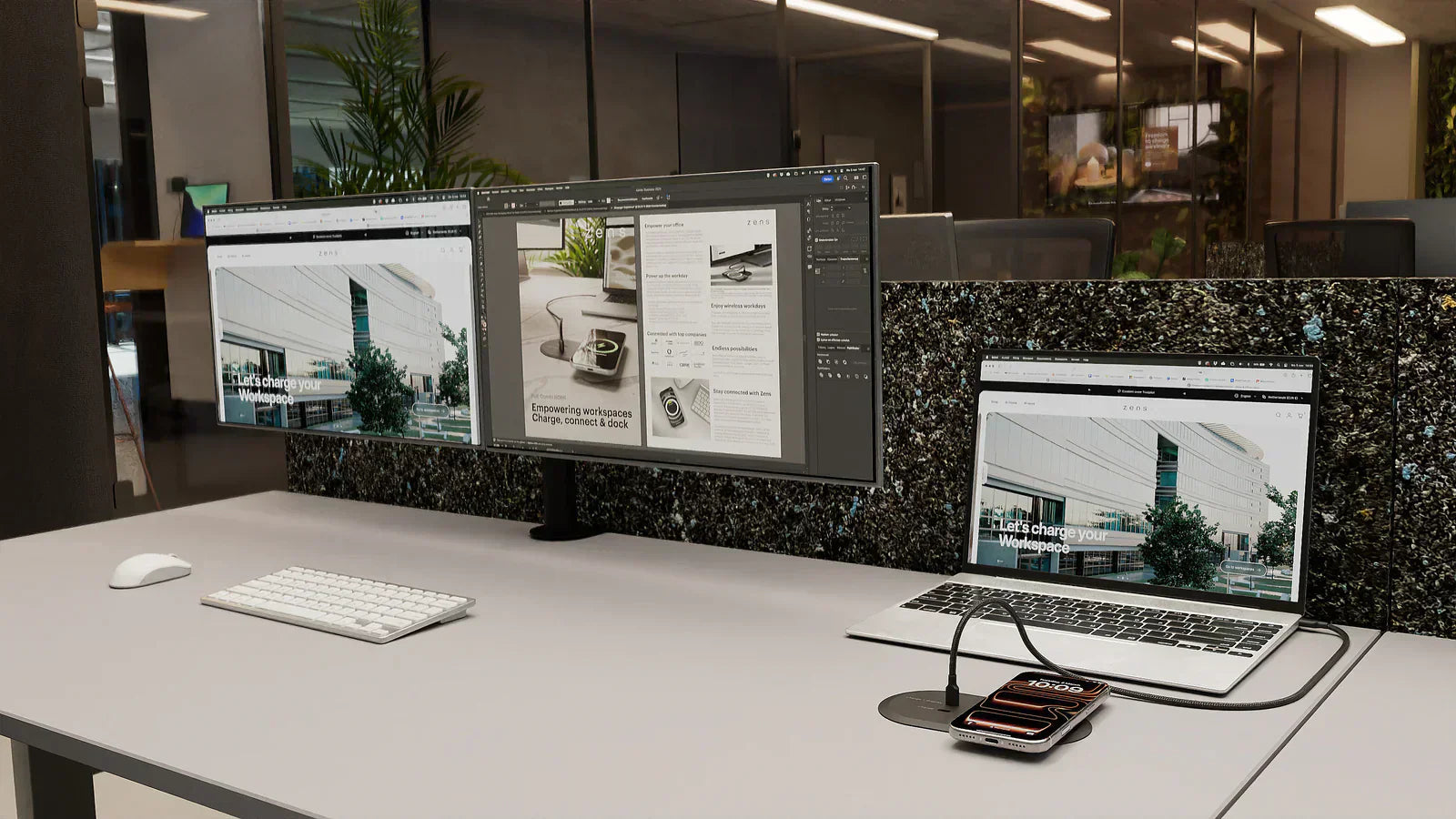
The shift to USB-C has a direct impact on how workspaces function. Instead of multiple connection points and cables, a much simpler setup emerges where a single cable is enough to use a laptop fully. This lowers the barrier to sit down and start working straight away.
With fewer types of cables and connections, management becomes easier. There are fewer cables to handle, fewer adapters to lose and fewer compatibility issues. At the same time, USB-C requires the right choices. A solution with insufficient power, for example, can result in slower charging or reduced performance.
In practice, this is especially noticeable in:
USB-C is evolving from a convenient connector into the standard on which workspaces are built. By adopting USB-C now, organisations align with where the market is heading and ensure their workspaces remain relevant in the years to come.
It is important to look beyond the connector itself. The right power output and the right cables ultimately determine how well everything performs in practice.
For organisations looking to create simpler and future-ready workspaces, we offer solutions designed to support this transition. Consider: