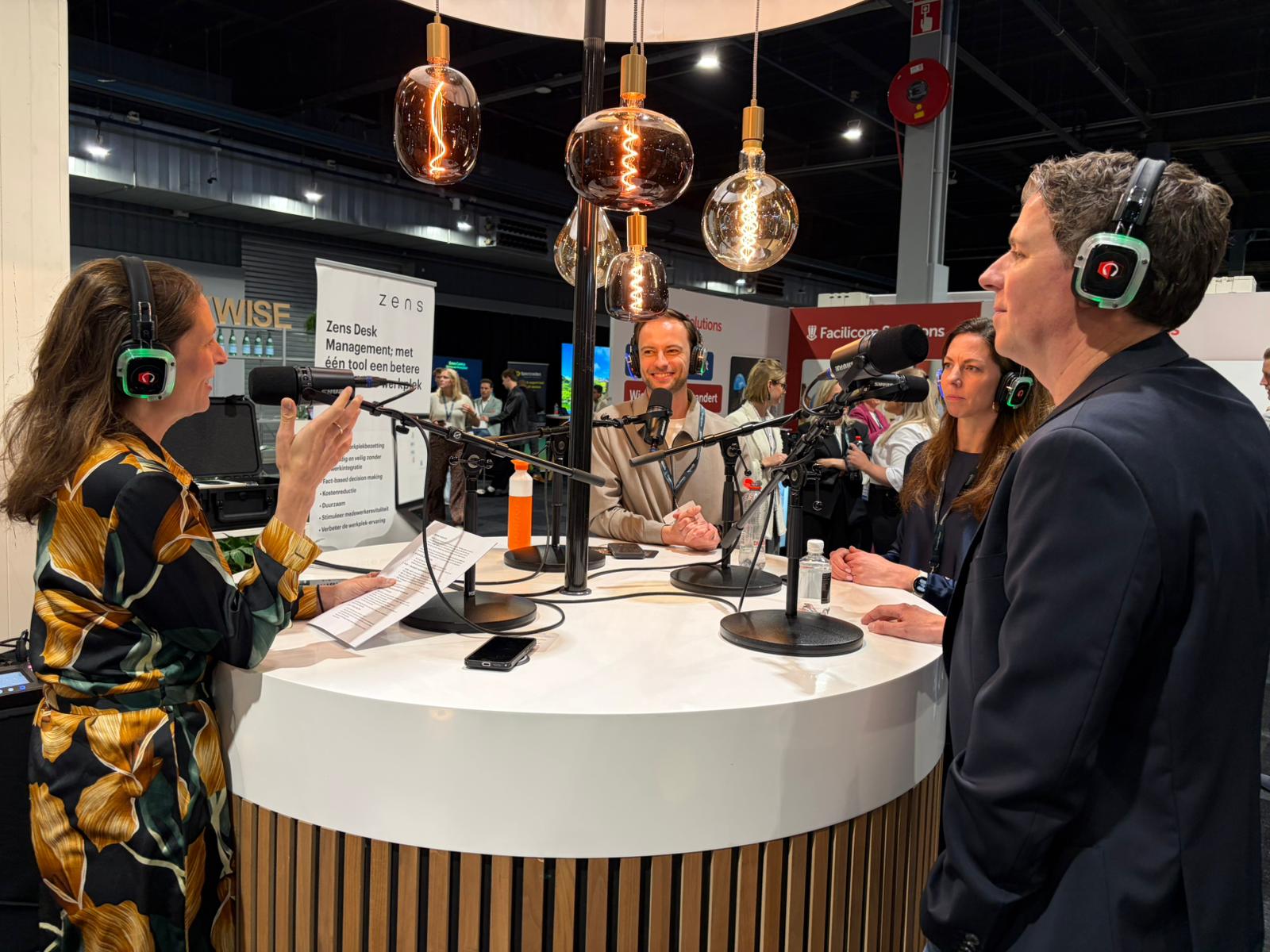
Data as the foundation for the ultimate employee experience
At Just Eat Takeaway.com, the reason for getting started was clear: the organisation wanted to understand how employees were really using the office when moving into a new building. Not by guessing, but by measuring.
“The office needs to add value to an employee’s day. Data helps us better understand how the workplace is really being used. You can see more quickly what works and where adjustments are needed.” Arjan Bosgraaf, Just Eat Takeaway.com
The connected workplace collects anonymous data on occupancy. For facility managers, this is highly valuable. Which zones are popular? Which workstations remain unused? With these insights, the organisation can steer much more effectively. Decisions about space usage, workplace design and even daily operations, such as more efficient planning of cleaning and maintenance can be clearly substantiated for management.
The power of invisible technology
How do you collect that data without making the office feel like a laboratory? The answer lies in the smart integration of technology and design. Zens brings technology to the workplace through wireless charging solutions.
For employees, it is all about convenience: you place your phone or earbuds down and they charge. No hassle with cables or adapters. But behind the scenes, the technology does more. Erik Plasmans explains: “Wireless charging may seem like a small solution, but it touches on much more: ease of use, insight, operations and ultimately workplace value. The strength lies in the combination: employees experience immediate convenience, while organisations gain a better understanding of how their workplaces are being used.”
Technology wrapped in high-quality design
Office interior specialist Ahrend then ensures that this technology blends seamlessly into the physical working environment. After all, the connected workplace should not feel like a technical add-on, but like a natural part of the interior. Juulke Broos from Ahrend emphasises that a good workplace should feel intuitive:
“Technology should not be separate from the workplace. It should be part of the experience, the design and the way people use the space. Once it is naturally integrated into the design, it helps people find their way more easily.”
More sustainable, smarter and more inclusive
The benefits of a connected workplace go beyond efficiency and comfort. The podcast highlights that data also plays an important role in sustainability:
• Smarter cleaning: facility teams only clean the areas that have actually been used. This prevents unnecessary work and saves costs.
• Preventive maintenance: intensively used workstations can be checked earlier, significantly extending the lifespan of the furniture.
• Social impact: data can help organise service processes in a way that creates room for social initiatives, such as involving people with a distance to the labour market in office maintenance.
Success through synergy: start small
The Just Eat Takeaway.com case shows that success depends on collaboration. Just Eat Takeaway.com brought the practical workplace context, Zens provided the technology and Ahrend contributed the design.
For organisations that also want to use their square metres more intelligently, Arjan has a reassuring message: you do not need to transform the entire office at once.
“Start small, see what it brings and learn from practice. For example, begin with a number of workstations or a specific zone with a lot of movement. It will quickly become clear where the greatest value lies.”
Conclusion: an office that learns from its users
The connected workplace shows that technology only becomes truly valuable when it makes things easier for people and smarter for the organisation. By transforming wireless charging from a practical feature into the starting point of a workplace strategy, you create an office that continuously learns from its users.
The result? A working environment that is more human-centric, more sustainable and fully future-proof.